Sunday, February 24, 2008

The Revolution Will Not Be Televised.. But It Will Be Podcasted


Call me a skeptical Sandy, but I don't think I'm quite ready to jump on the Podcast bandwagon just yet. While our book, The New Influencers, mentions a variety of wonderful applications podcasts can add to our lives, what remains to be seen is whether or not podcasts can become a viable force in the mainstream media world. And for that to occur, podcasts must begin to attract people to listen so that advertisers will be encouraged to pump money into them.

So how big of an audience is actually listening to podcasts? According to an Arbitron/Edison Media Research study in April of 2007, 30% of Americans over 12 have an iPod or other similar digital media player. Based on US census numbers, that would be about 73 million units and therefore 73 million listeners. Arbitron claims only 13% of the total audience has ever heard a podcast; meaning at the least, listened at least once to a podcast. Even more depressing, the study proceeds to claim that only about 1 to 2 million people WORLDWIDE listen to podcasts REGULARLY! Not a very large audience to advertise to, in any medium.

Now, this is not to say podcast audiences are growing by large amounts of numbers everyday. We know that each year the amount of money being advertised in podcasts is also increasing with audience size. But who is going to reap the benefits of this increased revenue. Well, leave it to Big Media to extend their Kraken like tentacles and sink the ship of independent podcasters.

As TechCrunch's Duncan Riley puts it, "While greater awareness of podcasting is growing the overall market for podcasts, the mainstream media is taking a big slice of the pie." Meaning that they are the ones that are benefitting the most from this new media form. Will podcasts sink or swim, and who will reap the benefits of their growth? It will be interesting to see if independent users will maintain a strong presence and not be swallowed up and consolidated much like radio has become. And we don't want that to happen because we ALL know:
"the radio will always suck".

Saturday, February 23, 2008

To be or not to be...A Facebook Prince


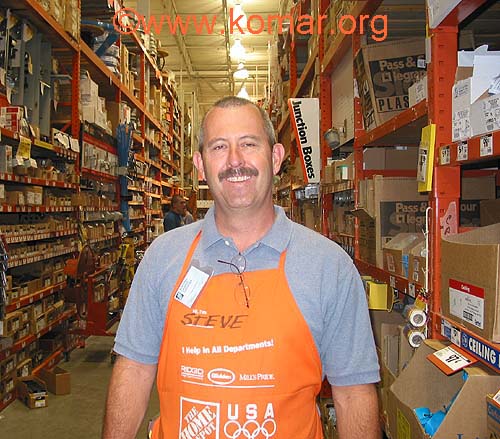
You see this man? He is going to jail. Why? We'll get there. There are some things I read on the internet, that as soon as I see them with my eyes, I know they are not true. For example, I recently saw a video explaining how Tom Cruise was at the scene of 9/11 helping fire fighters pull people out of the rubble...yeah I wasn't really buying that. Apparently he was helping them out somehow, but we all know 80's Tom Cruise > 90's and beyond Tom Cruise. And of course we have wonderful banners on websites claiming that if we hit five monkeys on the head with a click of the mouse we can win an a million dollars or something to that effect. But the next story I came across was so incredulous, I could not believe it. Yet, after much research and deliberation, I have come to the conclusion it is emphatically true. So believe it or not, here is something that really brings the concept of transparency to a whole new level:

"A Moroccan court sentenced a computer engineer to three years in prison late on Friday for setting up a Facebook account in the name of King Mohammed's brother."

That's right, a man is going to the BIG SLAMMER, for setting up a fake Facebook account. Imagine how awkward/horrifying that first day is going to be for him. If I were to transcribe how this encounter will go down, it would probably be like this:

Scary Inmate #1: "So what are you in here for" (flexes gigantic, tattoo covered biceps, while pointing to scars that are most assuredly from illegal activities).

Fake Facebook guy: "I pretended to be a prince on the internet" (quivers nervously and cries on the inside) "What are you in here for?"

Scary Inmate #1: "Murder"

(single tear rolls down Fake Facebook guy's cheek)

end scene.

We have learned in class that transparency is a key element in today's Web 2.0 world. You can't go about these social networks galavanting as a masked crusader ala Zorro or some Mexican Luchador. The key to the success and rise of Web 2.0 is that there is some sort of community that is formed for the interactivity amongst the users. The amount of transparency that exists or is required may be different for each site. For example we all know what happened when the CEO of Whole Foods decided to blog about things that shouldn't be stated, and did not reveal who he was. Bad idea, and he was reprimanded for it. Now, if there is a Myspace profile created for say...Homer Simpson, it is a safe bet that the person who actually logs on to that Myspace is not really Homer Simpson. But, we don't reprimand that person for creating it, because the community understands that transparency on Myspace is not as crystal clear as perhaps we would like it to be. Yet, Facebook is a whole different barrel of monkeys (second monkey reference, what is wrong with me?). We expect for the person who owns a Facebook account to actually be the person they are representing probably because the site is a network site that initially required you to have a university email, thus making it much harder for Internet predators to fake their way into the webs of college alums. This is not say it doesn't happen, but its a lot harder.

Now, in the case of this Moraccan engineer we have a deliberate disregard for transparency. Not only did he choose to lie about the person he was representing, but he choose to be someone I'm guessing is a pretty, popular well known person within Morocco. Fouad Mortada (the man about to serve hard time) claims that this was simply a joke, and he truly admires the Prince, and in no way meant to do anything wrong. Regardless though he was arrested on February 5, blindfolded and taken to an unknown building where he was beaten and insulted. On Friday he was found guilty of falsifying data and imitating the prince without his consent, sentenced him to three years and also fined him $1,300.

I think beyond the idea of transparency what we are seeing here is an interesting take on government net neutrality. Say what you will about America, but at least you can make a fake Pete Wentz profile without having to fear Homeland Security busting down the door and dragging you out into the dark of the night. But where do we draw the line? I did my own search on Myspace for fake George Bush profiles created by users. Oddly enough I fond over 290 fake profiles all offering a different profile take on our Commander in Chief. I'm assuming most of these people are safe and sound, sitting in their houses probably playing World of Warcraft. It seems it is up to the respective government to decide whether false information is a threat to their safety. And from this story it seems that the leaders of Morocco have little to no sense of humor, and have very little regard for web user independence. Regardless of whether or not Fouad Mortada violated the unwritten rule of Web 2.0 transparency, I just do not see the justice of sentencing of a man to three years of hard time in PRISON. As social networks, technology, the internet, and our lives become more and more increasingly integrated web neutrality is going to become more and more of an issue. We must make sure the line between neutrality and safety for everyone is preserved and not abused. Unfortunately for Fouad Mortada, it is a little too late to change his status, and far to late to adjust his news feed.

Sunday, February 17, 2008

Home Depot, more like Shmome Shmeeep-O


Let me begin by saying I'm not mad. No, instead, I am rather irate. You see, I just had a bad consumer experience. Now in the past I would have griped to a few of my friends, comiserated with my mother and that would have been the end of that. But after reading a chapter in the The New Influencers, and recollecting over the infamous Comcast technician video we saw in class, I shall now blog about this atrocious moment in history and make it an everlasting footnote in the index of the ever-growing internet. So sit back, relax, unwind, and prepare yourself as the story unfolds.

It's cleaning time at my house. This means six college aged males muster up all the courage and might to clean what could be considered a toxic waste dump. This fervor and gallantry only rears its glorious head about once every five months, so it was quite an occasion. There was dusting, sweeping, mopping, Swiffering, and vacuuming. It was a regular parade of cleanliness and after about five hours we were nearly completed. That was until we realized a lot of light bulbs had gone out in the house ever since we moved in, two years ago. It was high time we replaced them. After a quick count, I noticed that indeed 30, I repeat thirty, lightbulbs needed to be replaced. It was then decided we should go to our local hardware mega store and purchase all the lightbulbs we could afford. Keep in mind, we are ready to spend WHATEVER it might cost to buy these bulbs, because by God we are tired of living in the dark, and we are ready for enlightenment (sorry, could not avoid the pun).

Normally, I would not mention the name of the establishment where this atrocity occurred, but since now I am a NEW INFLUENCER, I will gladly post the name of the horrible store we went to:

HOME DEPOT, HOME DEPOT, HOME DEPOT!!!!!


Got it? So, we walk into the store, which quickly resembles the hardware store version of Willy Wonka's chocolate factory, but not nearly as sweet, and not nearly as magical. With shelves resembling towers and monuments built for electrical fans, chainsaws, lawnmowers, and enough fertilizer to grow grass even in Death Valley I'm thinking this store can supply me with thirty, low cost, 65 watt, indoor floodlight light bulbs. Oh oh oh, was I in for a treat. First of all, after searching for the light bulb aisle as if it were the lost city of Atlantis, we stumble across it. The bulbs we need are moderately easy to locate, but there are two brands and one brand does not have any prices on it. Nearby we locate a button that informs us if we push it, a store attendant will be there quickly to help us. After pushing the button twice and waiting nearly ten minutes, a meandering store clerk somewhat helps us, but is ultimately useless. We find that the ones we want are the following price:

A box deal for 12 bulbs for $34.97. Not bad of a deal, so we decide we can chill on the other six bulbs we need and grab 24 bulbs for $69.94. This roughly makes each bulb only $2.91, a good deal by any measure. So we look to find a box that houses the said 12 bulbs for $34.97, but there is no box to be found. In this entire mega-conglomerate-over stocked-Disneyland-theme park of a hardware store, they don't have the one item we need. So instead of accepting defeat we gather 24 bulbs. Now keep in mind, individually a single bulb is $4.27., much much higher than $2.91. In fact, if we have to pay for the bulbs individually, it will cost us exactly $32.54 MORE out of our poor, empty, college student wallets. So, we plan to explain our situation to the cashier who we assume will be a human, with a heart, and a conciense, and reason, and be able to understand our plight and do the right thing and give us the right price for what we want.

Let's recap real quick. If Home Depot does the right thing, because it's their fault they are out of stock on an item that should be available, especially when I could buy 5,000 buckets of paint in necessary, we save over:

$30 dollars

If they don't do the right, and instead choose to push the customer beneath their heal and crush us like a figurative jellybean we will end up paying:

$102.48

Well, we were wrong. As soon as we get to the check out line, we explain our case and a manager is called. The manager is asked to do a price check and I follow him to where we found our product. He quickly informs me that I am wrong, that the deal for $34.97 is if, AND ONLY IF, those 12 bulbs come together in a single box. It at this moment the only thing seperating me and saving a lot of money is a box. A piece of cardboard. Something I could make if they gave me five minutes, a roll of tape, and some spare scraps from the back. A BOX. I inform the manager that this is ludacris and inane, and ask him if he really wants me to pay for 24 individual light bulbs at nearly twice the price, JUST BECAUSE THE DON'T HAVE A MODIFIED PAPER ENCLOSURE AROUND THEM. And he says and I quote, "Sorry, that's just the way it is, we just happen to be out of stock of the product at the time". And I said, "Well I don't think I'll be buying those light bulbs here." And do you know what he said to me? With those beady, empty eyes, that scraggly-aging, handlebar mustache, and those thick, coke-bottle glasses he said...

"Fine".

Fine that is, as in, "I don't care what you do, I'm old enough to be your father and I don't believe in customer service. Sure, we could have made at least $70 dollars off this transaction, but we are a giant and greedy company, seventy dollars means NOTHING to us! You are just a kid, a child, a petulant pip-squeak and you have no influence or power in this world. Fine." And he danced away gleefully, like a joyous faun might do when celebrating a winter's solstice. Not really, but you get the point, he didn't care about me, or my money. He made me feel like an insignificant loser.

So this has been long, overwrought, somewhat exagerated, and extremely melodramatic, but I don't care. I'm mad. I'm pissed. I have steam shooting out of my ears! And I'm blogging about one of the worst moments of my consumer life. Well to you Mr. Home Depot Manager, I'm through with your services. I will never step foot in your horribly orange and white decorated amusement park of a store again. I am an influencer, and I have a voice. And you sir, well you probably will never read this, nor will anyone for that matter, but it doesn't matter. You are the last fragments of an aging generation that doesn't realize how powerful people like me are. You're company slogan states "You can do it. We can help." Well, I can do it, and you did help by adding fuel to a fire that never should have been lit. Speaking of lit, we ended up buying a lot of light bulbs for cheap at Wal-Mart.

Moral of the story: Don't shop at Home Depot, I know I won't.

Saturday, February 16, 2008

I Spy With My Eye...Everything About Your Internet Life


Here in America, we love our privacy. In fact, we value it so much back in the day we made an amendment to our constitution to make sure British soldiers (or lobsterbacks as I like to say) couldn't come into our houses and do as they please, i.e. drink tea, eat crumpets, say something about the Queen. This fundamental notion of privacy is a large part of our culture; the idea that our property and lives should be kept private and be respected. We have confidential files, authorities must obtain search warrants before entering our house, we have passwords for virtually everything, and the list goes on and on. However, it seems that with the rise and proliferation of the internet our sacred right to privacy has been slowly chipped away piece by piece. Therefore, it is high time we examine this conundrum!

Back when the internet first began to rise in popularity (remember when everyone had American Online?), there wasn't too much to worry about. Dial-up access was costly, intolerably slow, and limited the time and speed of our connectivity to the very limited virtual network that existed. But now, with the rise and dominance of broadband internet connections, it is easier and more affordable for users to constantly be connected to the internet. For example, people now pay their bills exclusively online. They set their bank accounts to be automatically connected to their bill collectors, so that money is withdrawn from them as soon as the bill is released. With iPhones and other mobile phone devices we can instantly be connected to the internet at any point in time. With applications like SnapMyLife, you can take a picture, instantly upload it on their social network and have friends and peers comment on it, within seconds of taking a picture! It seems the more technology is produced, the closer our lives become integrated entangled within this interweb.

This is not a bad thing. With greater connectivity we have learned we can do amazing things through public relations, advertising, charity outreach, blah blah blah etc. But what has happened to our beloved privacy? That bill you paid with your online account setup, most assuredly had your bank account number saved in the annals of the internet, most likely with your social security number. An easy goldmine for a hacker with minimal skills! The photos you took on your iPhone of you chuggin Zimas with Hannah Montana is available for the world to see, and since you're most assuredly under 21, now you're parents, teachers, coaches, and preachers all know you are a very young alcoholic. Yes, now we can be connected within a moment's notice, but what we fail to recognize at times is that very fact, WE ARE CONNECTED. When you post to the internet, you have now entered the public sphere, an its practically public domain. Privacy is not really a counterpart of connectivity. It stands in the way of full networking and integration. How many of us enjoy firewalls, member's only websites, or facebook profiles of our ex's that are set only to private? It seems to be a full member of this online network, one must give up a large portion of their anonymity to fully participate in the evergrowing online network.

But what if I told you, this was no longer so? What if someone created a social network that allowed you to post pictures of all your frat party keggers, upload as many videos of you 'cranking dat Soulja Boy' dance, and you never had to worry about an employer, stalker, or the worst of both of these an "employer stalker" (I don't know if those exist, but imagine if they did!) browsing upon your private life. In fact, it is truly the best of both worlds. A social network with connectivity that is determined solely by you. But, alas, no one has made such a thing right? WRONG.

I would like to introduce to you MOLI. Designed by financial transaction veterans who understand the need for secure transactions, MOLI's members, consisting of enterprising individuals, groups and small businesses, can control their privacy by managing multiple profiles in one account. Members can then segment their social, business and family relationships as well as attain more control using three levels of permission - public, private and hidden - to determine who can and cannot access their profile information. In addition, members can add low-cost, online store capabilities to sell their products and services within the global community. MOLI membership is free as are most of the interactive tools. It allows for a user to be connected and still be private. And from a public relations stand point it is also a win. For advertisers, the appeal of professionally created content in specific channels provides a higher degree of confidence that their message will reside within an appropriate context for their brand. Privacy + networking = Awesome.

You probably are familiar with the Andy Warhol quote about how in the future everybody will be famous for 15 minutes. Well, we know with the internet, it has become increasingly easier to become a "celebrity".
And it seems far too many people are willing to forgo privacy just to achieve the status of "celebrity". But I feel renowned and infamous artist Banksy is more correct in his quote, "I think Andy Warhol got it wrong: in the future, so many people are going to become famous that one day everybody will end up being anonymous for 15 minutes." Instead of asking ourselves what is the price of fame, we must ask ourselves "how much will we be willing to pay for anonymity?"

Sunday, February 10, 2008

Believe the Hype...machine

Okay, okay, okay I know you're saying, "Wait a second, didn't a few posts ago didn't this very man tell us to rage against the hype machine? Now, you're encouraging it?!?!?" Allow me to explain myself and this rather erroneous contradiction.

Not too long ago, in fact less than two weeks ago, I explicated in blog form how bands these days can get famous just from internet hype, especially through the use of blog promotion. The message I was trying to convey is we need to be careful that these bands that do receive hype, fame, and money deserve said rewards. But how do we find these bands? With so many sites that allow users to upload music to their server space, there is an increasing influx of BAD music. I mean a twelve year old can record his ripping cover of "Smells Like Teen Spirit" complete with prepubescent vocals and horrible tuning, and within minutes have it streaming on Myspace, Youtube, or Purevolume. And most assuredly following that we will be bombarded with bulletins informing us that he has just posted a new song and that it sounds really "tight". So how do we sift through the muck and mire that is being forced upon us. Well thats where we turn to the Hype Machine.

The Hype Machine is a website that tracks and follows music blog discussions. Every day, thousands of people around the world write about music they love — and it all ends up on their site. Imagine the site as a giant music magnet, attracting all songs and artists that are blogged about in the junkyard (in this case the internet). The songs and artists that are the most metallic (no not the most Metallica, that's different) i.e. most popular or talked about, stick to the magnet and are posted onto the sites front page. Instead of scouring the internet like a wandering traveler in the desert, desperate for water, the Hype Machine finds them for you and you can pick and choose as you please.

Here's how it works:
  • "The Hype Machine tracks a variety of MP3 blogs. If a post contains MP3 links, it adds those links to its database and displays them on the front page.
  • Some of the frequently accessed tracks are cached by the Hype Machine server, much like Google Search caches web pages, to reduce load on the bloggers' servers and protect their bandwidth.
  • Those tracks are NOT available for download, but you can preview them via the play buttons that are next to each track.The blog that posted a particular track is identified under every track by name so you can read more about why they posted it. If you enjoyed a track someone posted, stop by and let them know!
  • You can purchase CDs and individual tracks by using the "amazon" and "itunes" links that appear next to most tracks. Each purchase you make via the Amazon and iTunes links supports both the artists and the Hype Machine. Please buy and enjoy." www.hypem.com
This is a huge breakthrough in online music because not only does it try to give artists exposure without letting people steal their music, it allows users to connect to one another's blogs, playlists, and user profile pages to learn more about other things they might like. Also, it encourages users to interact with actual blogs. For instance, if you are in a band, or are a huge fan of one, you can submit music to one of the blogs the Hype Machine collects from. If the blog likes what you send, they'll post it and so will Hype Machine, thus allowing for a lot of exposure to a strong, socially networked audience.

So, I apologize for previously stating that we should merely rage against the hype machine as if it were some terrible monster from the hillside. The truth is we truly do control the machine and technology can always be used for the betterment of everyone. The Hype Machine allows true fans of music to spread the word about music they love and also allows us to no longer be reliant on radio, MTV, or Rolling Stone to tell us what is cool. So I encourage everybody to go to the site, check it out, listen to some music, hate it, love it, praise it, diss it, turn it up, turn it down its all up to you. As I said earlier there is a lot of music floating around there on the interweb, so the question is "who has the power to spread it?" Well, in the words of our hero Captain Planet, THE POWER IS YOURS!

Sing it with me now: The more we get together, the happier we'll be.


I have a confession to make. There are some things in life I don't understand. I don't understand how Lindsay Lohan can still be considered relevant. I don't understand why people like Grey's Anatomy. And I really don't understand how people can look at Amy Winehouse and not want to curl up into the fetal position and cry. Alas, I digress. That being said, I would like to discuss with you today the concept of customer evangelists. We have learned about this concept and read about it extensively recently and every time we bring it up I just find it really hard to imagine someone spending all their free time promoting a product for FREE. It is beyond me how someone could truly love the carbonated beverage Vault so much that they actually made a website for it, much less the top Google ranked page. Regardless, whether I understand it or not, I still find it fascinating that these people exist. That is why we shall take a closer look at them.

From a public relations standpoint it's almost like finding the holy grail. You have a product/service/good/thing/etc. you need to promote, and you know its the best one on the market. You need publicity and press for it, but you also know the best type of advertising is word of mouth. You want to get your point across, but you don't want to spend a lot of money, because you're client is cheap (naaaaaahhh j/k, but they could be, who knows). Well now, you don't have to spend a dime, because customer evangelists are taking the reigns of how a product is being promoted. Now all of a sudden, your client is receiving publicity and press from a consumer who not only consumers your product but loves it enough they want to tell the whole world about how much they love it WITHOUT GETTING PAID.

To me the best part of customer evangelists is what happens when they start to network and interact with each other. With the advent of the internet people who were once secluded to the social groups within their local community can now be instantly connected to an unlimited amount of individuals who have the same likes/dislikes, loves/hates, interests/disinterests. When several of these customer evangelists connect they can create a form of brand loyalty that is truly extraordinary.

Now, let it be known that I never intended for this blog to become solely about Apple products, rather it just seems that when I wait till Sunday about what I'm going to write about it turns out that they always provide a very applicable example to our class's lectures and readings. So as I was lurking about the internet like Darkwing Duck did in the night, I came across a clip for an upcoming documentary called MacHeads. It is a film that centers around the community of customer evangelists that ascribe themselves to all things Apple. Now, to say these people are evangelists is a gross understatement. These people are a consumer cult, but without the space comet, red kool-aid, and mass suicide stuff. This community has grown over the years not only in size but also in the amount of zeal they hold for this company. It goes to show that if a company can bring people together and get them excited about their products, well the evangelists will go tell it on the mountain and make sure to bring more and more people together into their community, thus providing more and more sales. And after all, the more we get together, the happier we'll be.

Please watch this video! It is hilarious/horrifying/awe-inspring:

Sunday, February 3, 2008

Whatever happened to the "Personal" in Personal Computers?


Have you ever seen the movie Antitrust starring Ryan Phillippe? Probably not, but that's okay, it's not that great of a movie, so I'll go ahead and you give a plot synopsis from IMDB: "A computer programmer's dream job at a hot Portland-based technology firm turns nightmarish when he discovers his boss has a secret and ruthless means of dispatching anti-trust problems." Now, I don't remember exactly why I saw the film, but I do remember quickly realizing that this movie was an poorly guised allegory for the antitrust problems Microsoft was a part of in the 1990's. The company was based in Portland instead of Seattle, the CEO's name was Gill Bates instead of Bill Gates (not really but it might as well should of been) so on and etc. But the funny thing is even in 9th grade I was able to recognize this parallel and was not surprised or dumbfounded. When I left the movie theater I recall saying to my friend, "Man I bet Microsoft DOES kill whistleblowers in their company." This was also quickly followed by, "Did you call your mom to pick us up?"

Anyways, after reading Chapter 7 in the New Influencers I couldn't help but be reminded of the horrible acting and screenwriting that was present in Antitrust, and I became really intrigued about how Microsoft tried to humanize themselves. Robert Scoble's Blogger's Manifesto is truly something every company should ascribe to. My generation has grown up in a reality with Enron, MCI Worldcom, and Microsoft. The idea that corporations are somehow looking out for the best interest's of consumers is laughable, and the notion that they are even more concerned about the welfare of their competitors is even a better joke. While the book goes to say that the humanization of Microsoft was a success is something that I can't really agree with.

Due to my own personal experience I will try as hard as humanly possible to never own a computer that runs on a Microsoft operating system again. Their recent blunder with Windows Vista is further proof to me that they really haven't listened to what the blogosphere or consumers are telling them. Furthermore, I don't feel that they are any more "human" than they have ever been, and still are much like the monolithic giant IBM (rember Big Blue?)was back in their heyday. The question I have is, has Microsoft really read the blogger's manifesto?

The point is you can only be on top of the mountain for so long. While Apple continues to put more and more innovative products, made with better quality, better technical support, at reasonable prices they also continue to build a strong consumer based community and humanize themselves with honest, personal communication from the man himself, Steve Jobs. Although, it is obvious Microsoft based systems dominate the market share of all personal computers, a crack in the dam will eventually break free, and if the New York Giants can beat the New England Patriots; who knows, in a couple decades down the road we might see Antitrust II starring Justin Long showing how Apple was able to eliminate the competition.
I personally feel corporate transparency is essential in this day's market to remain a vital, relevant, and successful company, just make sure whatever is revealed is something worth seeing.

YouBama, iBama, ManypeopleBama


With Super Tuesday closing in on us as we speak, I figured a politically centered post was most appropriate. The 2008 presidential campaign has been the most technologically focused campaign of all time. Candidates have reached out with a variety of forms of social media to attract voters and to connect to them on a personal level. Some people have gone so far as to say that this is the first YouTube election. With millions upon millions of campaign dollars at stake, and the hopes of several devout supporters candidates are continuing to look for new ways of garnering more attention and votes through the world wide web.

But as we learned in our class there are people who might support an idea, product, or cause so much that they desire to support that on their own, without any assistance or payment from the very thing they support. Such is the case with the new grassroots website YouBama. Created by two Stanford grad students, the site serves as a grassroots outlet for supporters to upload testimonials, music videos, clips of Obama on television, and practically anything related to the Obama campaign. An interesting feature is the rating feature which allows users to vote videos up and down much like the site Digg. Uploaders have featured such notable people as George Clooney, Jimmy Carter, and Charles Barkley but most of the contributed videos are from everyday people who simply want to promote their inspiring candidate.

This is another example of citizen marketers who are impacting the public relations through social media. The creators did not make the site for any profit, and do not wish to create any other sites for other candidates because they feel, "this site is most applicable to the Obama campaign because of its efforts to reach out to younger voters and speak to their aspirations." What happens when brand loyalty is fused into a candidate and mixed with a little bit of Web 2.0? Well you get just another way for a candidate to reach out to a voting population and try to impact a generation most often noted for its apathy.